Personalization
Which Date, Time, and Place Should You Use for a Personalized Star Map?
Choose a date, time, and place for personalized star-map art, including practical options when an exact detail is unknown.
Published July 18, 2026
Map Our Stars Editorial Team
The guide in a minute
Generated from this published guide. Read the full article for examples, context, caveats, and source notes.
This guide helps you choose the date and place most closely associated with a milestone, then decide how precisely to handle the time. It keeps emotional meaning central while distinguishing known details from representative choices.
- Start with the milestone’s most meaningful date and place rather than searching for a universally correct option.
- Use the exact time when you know it; otherwise choose a representative time and frame it honestly as part of the artwork’s story.
On this pageThe Role of Date, Time, and Place in Celestial Charts
Quick answer: Use the calendar date and place you associate most strongly with the milestone. Add the exact time when you know it; otherwise, choose a representative time and treat it as part of the artwork’s story rather than an exact historical record.
Creating a personalized star map is one way to turn a remembered moment into wall art. Whether you are commemorating a wedding, a first date, or the birth of a child, the selected details become the basis for a distinct artistic celestial composition. However, when you sit down to customize your print, you might find yourself wondering exactly which details to enter. Should you use the time the ceremony started or when it ended? What if you do not know the exact hour? How specific should the location be?
This guide provides a clear decision tree to help you choose the date, time, and place for your personalized star map. We will explore how these details shape the final piece, what to do if you are missing information, and how to format your display labels for the most elegant result.
The Role of Date, Time, and Place in Celestial Charts
To understand why these details matter, it helps to look at how astronomy-oriented sky charts work. According to NASA JPL Education, sky-chart software relies on an observing location and date to determine which celestial bodies are visible, while adjusting the time allows viewers to see different points in the day or night [1]. Similarly, interactive charts like those provided by Sky & Telescope use latitude, longitude, calendar date, and time to render a specific view of the sky [2].
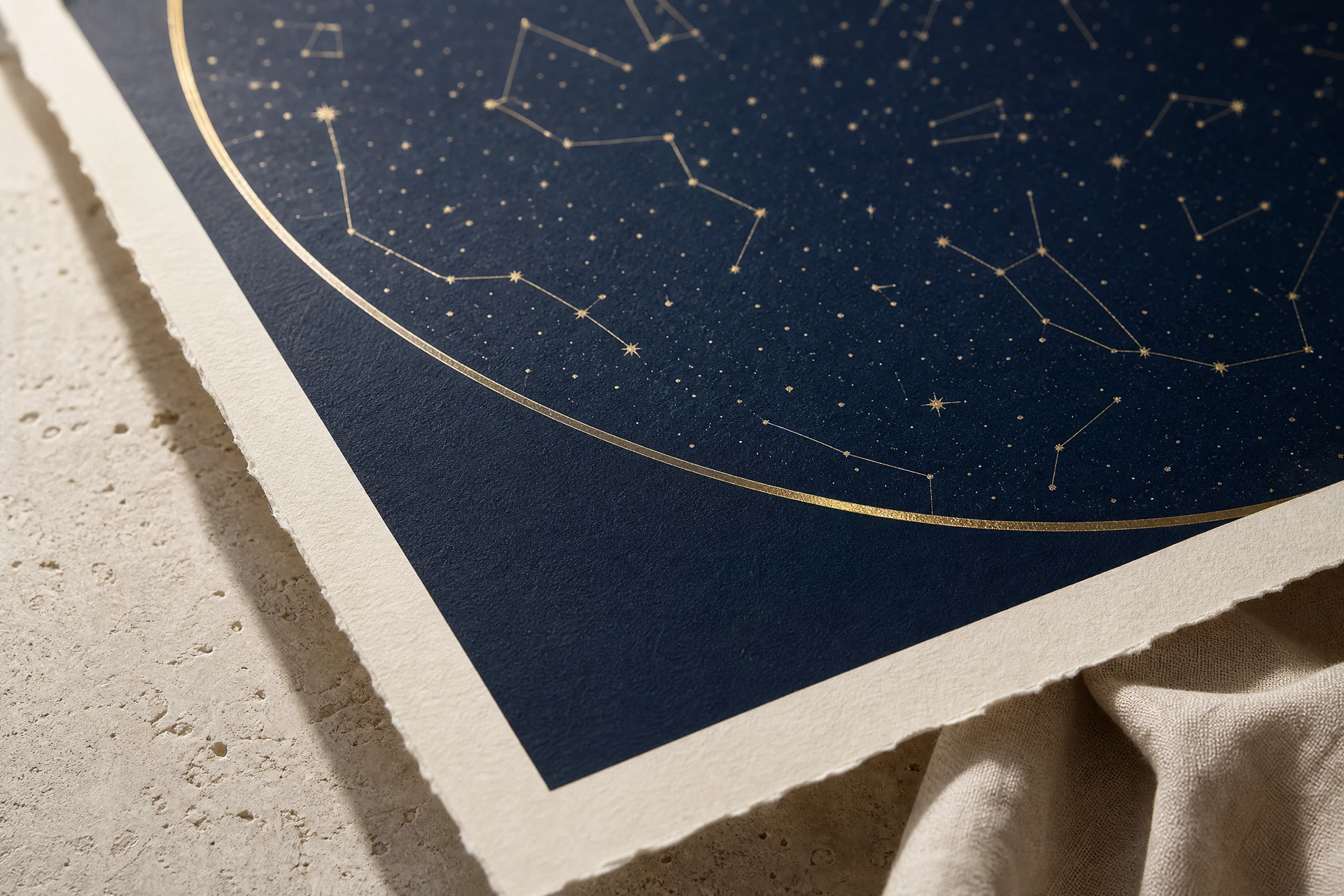
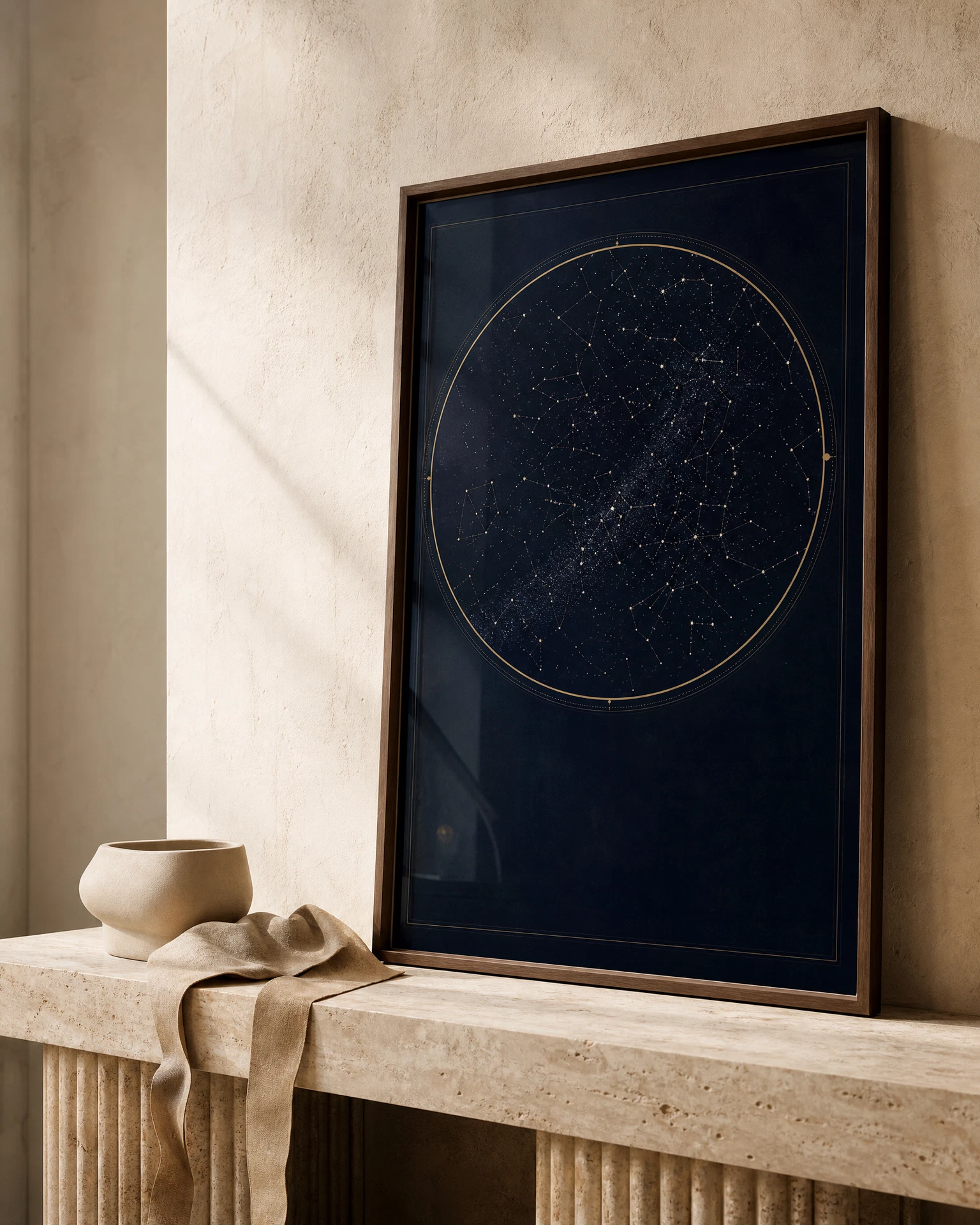
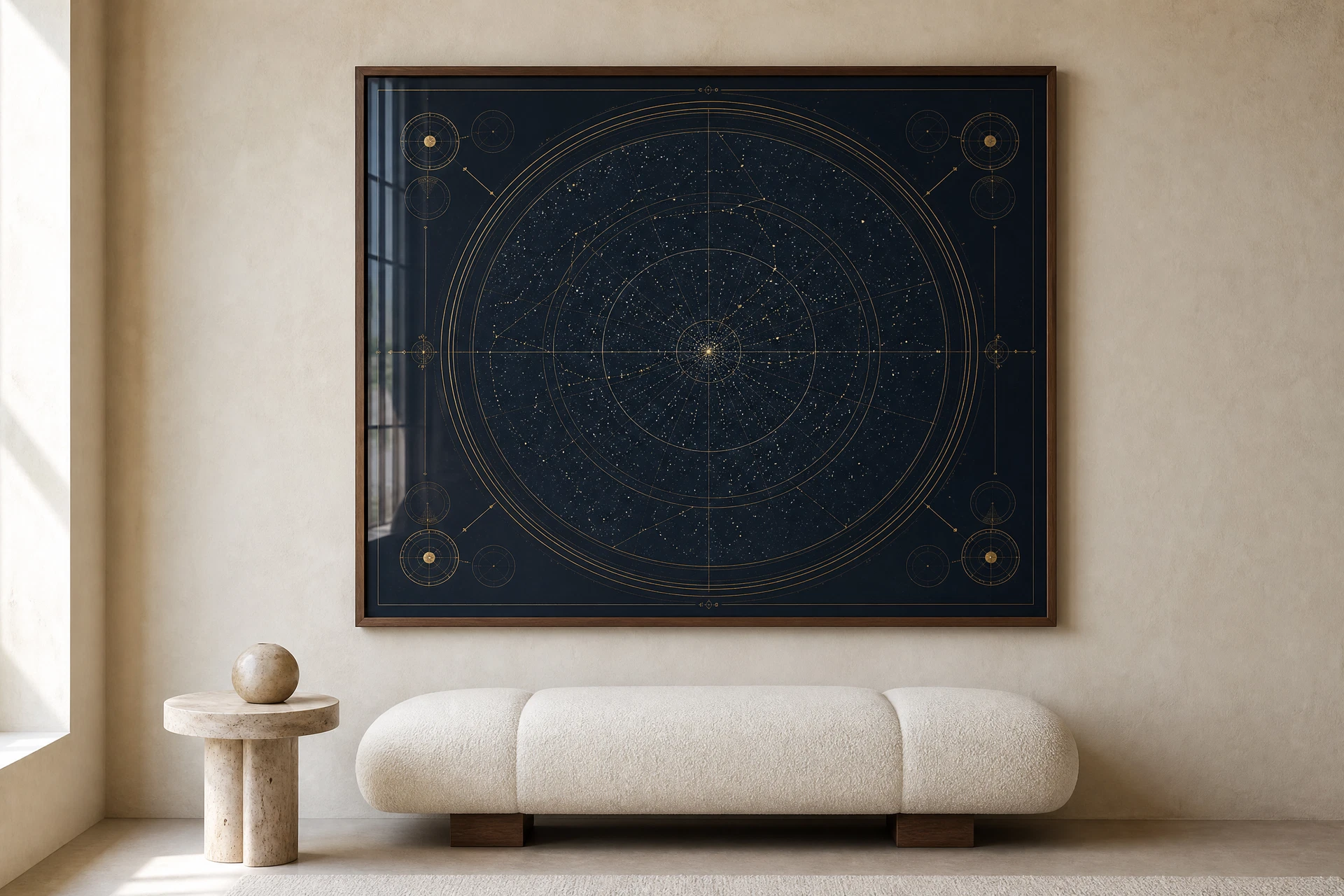
When you create a piece with Map Our Stars, you are designing an artistic celestial composition inspired by these principles. While our customizer does not produce an independently astronomy-verified reconstruction or a scientifically exact chart, it uses your chosen date, time, and location to generate a beautiful, personalized representation of the sky above your special moment. The details you provide serve as the foundation for this artistic tribute.
A Decision Tree for Your Milestone
Choosing the right details depends entirely on the milestone you are celebrating. Here is a practical framework to help you decide.
1. Choosing the Date
The date is the anchor of your star map. It is the calendar day that holds the emotional weight of your memory.
For a Wedding or Anniversary: Use the date of the ceremony. If you had a multi-day celebration, choose the day you exchanged vows or signed the marriage license.
For a First Meeting or First Date: Use the exact date you met or went on your first official date. If the relationship developed gradually, choose the date you both consider your "anniversary."
For a Birth: Use the child's birth date.
For a Personal Achievement: Use the date you crossed the finish line, received the acceptance letter, or closed on your first home.
2. Choosing the Time
The time adds a layer of specificity to your map. It represents the exact moment your life changed.
For a Wedding: You might use the time you exchanged rings, were pronounced married, or the ceremony’s scheduled start time. Choose the one you will recognize most easily later.
For a First Meeting: Use the approximate time you arrived, started talking, or another point you both remember. If all you know is that it was evening, choose a representative evening time and label it honestly in your own records.
For a Birth: The exact time of birth recorded on the birth certificate.
What if you do not know the exact time? A missing hour does not prevent you from creating the artwork. If you cannot confirm the exact time, choose one of these approaches:
- Use a clear default: Midnight or noon is easy to remember, but it remains a chosen placeholder rather than a recovered fact.
- Estimate the time of day: If you only know it was evening, select a representative evening time.
- Be transparent about estimates: Avoid presenting a chosen time as an exact historical detail.
3. Choosing the Place
The location grounds your star map in a physical space. It is the setting of your story.
For a Wedding: The city and state (or country) of the venue. You can also use the specific name of the venue if it fits well on the display label.
For a First Meeting: The city where you met. If you met at a specific landmark, restaurant, or park, you can use that as the location.
For a Birth: The city where the hospital or birthing center is located.
How specific should you be? For the customizer to generate the artistic composition, a city and state/country are usually sufficient. However, for the display label printed on the map, you can choose to be as broad or as specific as you like. "Paris, France" offers a classic, romantic feel, while "The Eiffel Tower, Paris" adds a deeply personal touch.
Entering the Details Clearly
The current Map Our Stars customizer asks for a calendar date, a time, and one location label. Use the date and time controls for the milestone details, then write the place in the form you want associated with the artwork.
| Detail | Clear example | What to check |
|---|---|---|
| Date | October 14, 2023 | Day, month, and year |
| Time | 4:30 PM | AM/PM and whether it is exact or estimated |
| Place | Chicago, Illinois | Spelling and the level of specificity you want |
A city and region keeps the location concise. A venue name can feel more personal if it is unambiguous and fits comfortably. Because these values also seed the artistic preview, review them carefully before checkout.
Final Decision Checklist
Before finalizing your custom star map, run through this quick checklist to confirm your details have been reviewed:
- Date: Did you select the exact calendar day of the milestone?
- Time: Have you chosen the specific hour, or a meaningful default if the exact time is unknown?
- Place: Is the location set to the city or specific venue where the event occurred?
- Wording: Are the title and location concise, correctly spelled, and meaningful to the recipient?
Creating Your Artistic Composition
Selecting these details is a chance to decide which version of the story you want the artwork to preserve. Choose the moment and place that you will still recognize years from now, and keep any estimated information honest.
When you are ready to bring your memory to life, visit our customizer to begin designing your piece. You can experiment with different dates, times, and locations to see how they shape the artistic celestial composition.
For more inspiration on how to personalize your print, explore our guide on what to write on a personalized star map. If you are creating a gift for a specific occasion, our collections for anniversary star maps and baby birth star maps offer tailored design options. You might also find inspiration in our guide to first date anniversary gifts for more ways to celebrate your unique story.
References
[1] NASA JPL Education. "Find Planets in the Sky." Jet Propulsion Laboratory, California Institute of Technology. https://www.jpl.nasa.gov/edu/resources/project/find-planets-in-the-sky/
[2] Sky & Telescope. "Interactive Sky Chart." AAS Sky Publishing, LLC. https://skyandtelescope.org/interactive-sky-chart/